

Categories List
Recent Posts
 CNWINNEX BT35-11-6.3 Explosion-Proof Stainless Steel Axial Fan: 18,250 m³/h Medium-High Airflow for Reliable Ventilation Boundaries in Corrosive Hazardous WorkshopsIn the routine ventilation design of chemical workshops, hazardous-material warehouses, and oil and gas stations, equipment selection often faces an implicit contradiction: explosion-proof compliance answers whether a fan can be used at all, but the corrosion degradation of impellers and casings in carbon steel or aluminum alloy units under humid, mildly corrosive, or sulfur-bearing atmospheres steadily erodes the boundary of how long it remains usable. A fan that runs safely in a Zone 1 area for three years may still require premature replacement because pitting on the blades throws off dynamic balance and reduces airflow—a problem that explosion-proof certification alone does not address, but that material and process engineering must answer.
The CNWINNEX BT35-11-6.3 Explosion-Proof Stainless Steel Axial Fan is designed for precisely this contradiction: stainless steel casing and impeller confront corrosive gases and humid environments, ATEX Directive 2014/34/EU and EN 60079 series CNWINNEX BT35-11-3.15 Explosion-Proof Stainless Steel Axial Fan: ATEX-Compliant High-Efficiency, Low-Noise VentilationIn the explosive hazardous areas of petrochemical plants, oil and gas stations, hazardous-material storage facilities, and offshore platforms, ventilation equipment is not merely a process accessory—it is a foundational line of defense for the working environment. Conventional fans often struggle to reconcile material durability with explosion-proof reliability when faced with high salt spray, corrosive gases, and explosive atmospheres. The CNWINNEX BT35-11-3.15 Explosion-Proof Stainless Steel Axial Fan is engineered precisely for the ventilation demands of Zone 1 and Zone 2 high-risk environments. The product addresses corrosion challenges through stainless steel construction, establishes its explosion-proof baseline on ATEX and EN 60079 series standards, and balances 3,076 m³/h airflow with low-noise operation within a compact frame.
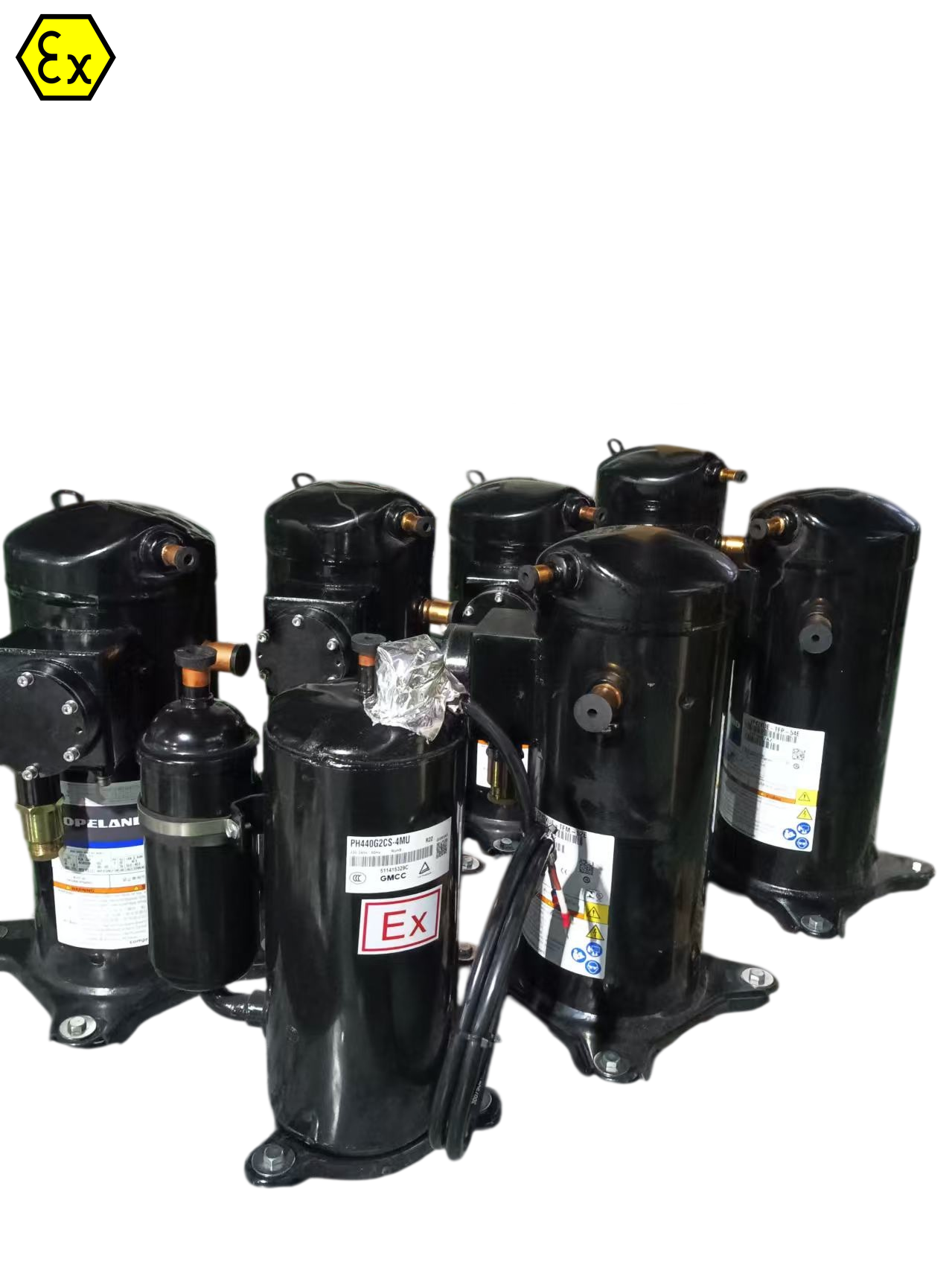
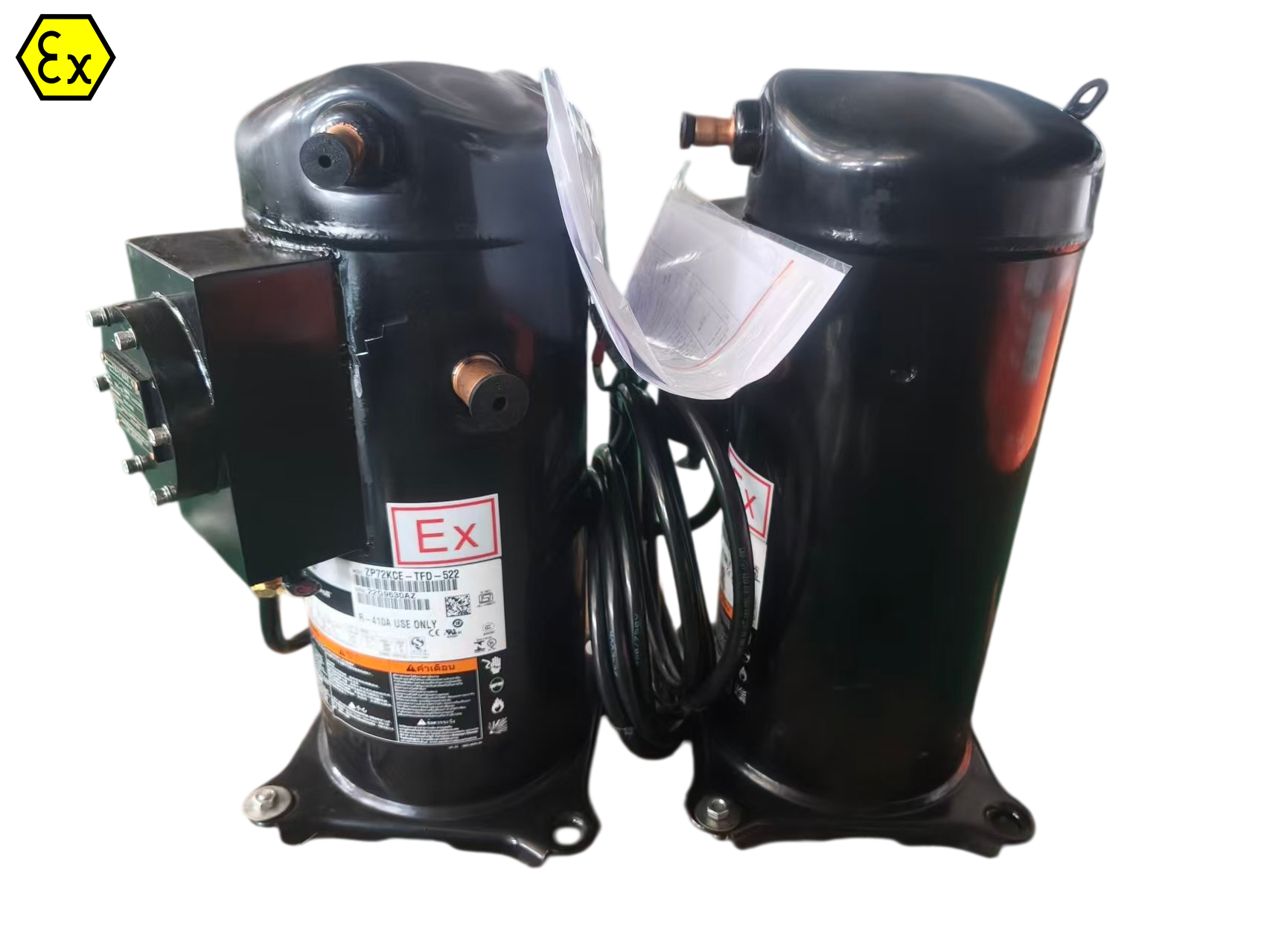
 CNWINNEX Explosion-Proof Compressor: Full Coverage of 9 Refrigerants and Precise Pressure Control for Uncompromised Safety BoundariesIn hazardous-area explosion-proof refrigeration systems, refrigerant selection is often dictated by a project's regional environmental regulations, thermal control requirements, and system design. As the "heart" of the system, a compressor's ability to be compatible with multiple refrigerants while maintaining absolute safety control under various pressure conditions is a key indicator of engineering maturity in explosion-proof equipment.
 CNWINNEX EX-ART2 2-Cylinder Explosion-Proof Compressor: Compact Architecture and Robust Parameters for Precise Cooling in Confined Hazardous SpacesIn offshore platform analyzer rooms, small explosion-proof control cabins, or space-constrained electrical equipment rooms, explosion-proof HVAC equipment faces strict physical size limits and exceptionally high safety compliance requirements. As China’s only independently IECEx-certified explosion-proof compressor company, CNWINNEX’s affiliated company introduces the EX-ART2 series 2-cylinder explosion-proof compressors—engineered specifically for these "space-premium and high-risk" working conditions.
Centered on static positive-pressure protection (pxb) and integrated with an increased-safety junction box and intrinsically safe protection components, the series carries the marking Ex eb ib mb pxb IIC T4 Gb. Through a compact 2-cylinder structure and two size matrices, it provides a solid, compliant refrigeration heart for cooling capacity requirements ranging from 3.39kW to 11.2kW.- CNWINNEX EX-ART4 Explosion-Proof Compressor: A Modular Matrix and Wide-Voltage Range Customized for Global Hazardous-Area Thermal ControlIn hazardous-area thermal control systems, a compressor must not only deliver sufficient cooling capacity but also guarantee absolute explosion-proof reliability. As China’s only independently IECEx-certified explosion-proof compressor company, CNWINNEX’s affiliated company introduces the EX-ART4 series 4-cylinder explosion-proof compressors. Centered on static positive-pressure protection (pxb) and integrated with increased safety (eb), intrinsic safety (ib), and encapsulation (mb), this series provides a rock-solid safety foundation alongside a highly modular model design and broad electrical parameter matrix—delivering a precisely matched, highly robust core for global explosion-proof HVAC systems.
- CNWINNEX Explosion-Proof Compressor: Static Pressurization + Multi-Layer Intrinsic Safety, an IECEx-Certified “Compliant Heart”The safety of an explosion-proof air conditioner is never determined by the enclosure alone. As the core moving component of the refrigeration cycle, the compressor is both the center of energy conversion and one of the potential ignition sources that most requires systematic control in hazardous areas. CNWINNEX’s affiliated company is China’s only explosion-proof compressor company holding an independent IECEx certificate. The compressor uses static positive-pressure protection as its primary structure, combined with an increased-safety junction box, intrinsically safe sensing and protection components, and a certified solenoid valve—forming a clearly layered, independently traceable explosion-proof system. Marking: Ex eb ib mb pxb IIC T4 Gb; ambient temperature range: -25°C ≤ Tamb ≤ +60°C.
- CNWINNEX’s affiliated company is China’s only independently IECEx-certified explosion-proof compressor manufacturer. Certifed to IEC 60079-0/-2/-7/-11/-18, marking Ex eb ib mb pxb IIC T4 Gb, -25°C to +60°C. The compliant core inside CNWINNEX explosion-proof air conditioners.The compliance of an explosion-proof air conditioner begins with its most critical component. CNWINNEX’s affiliated company is China’s only explosion-proof compressor company holding an independent IECEx certificate—a qualification whose significance lies not in the document itself, but in the fact that it places the most critical moving part of an explosion-proof air conditioner within an independent, traceable, and verifiable international compliance framework. In oil and gas, chemical, offshore, and hazardous-material storage applications, the compressor is both the heart of the refrigeration cycle and a potential ignition source. The depth of a compressor’s explosion-proof compliance directly determines the safety margin and certification credibility of the complete unit in Zone 1 and Zone 2 hazardous areas.
 CNWINNEX Explosion-Proof Split Wall-Mounted AC Passes IEC 60335-2-40:2022 Test Report and Achieves Australian SAA Certification, Expanding Its Compliance FootprintWe are pleased to announce that the CNWINNEX explosion-proof split wall-mounted air conditioner has successfully passed the TEST REPORT IEC 60335-2-40 after a 10-week operation testing period, and has concurrently obtained Australian SAA certification. With these milestones, CNWINNEX explosion-proof air conditioners now close the loop across three compliance dimensions—hazardous-area explosion protection, electrical safety, and Australian market access—meeting ATEX Directive 2014/34/EU and related compliance standards, and providing customers on global hazardous-area projects with a more definitive compliance foundation.
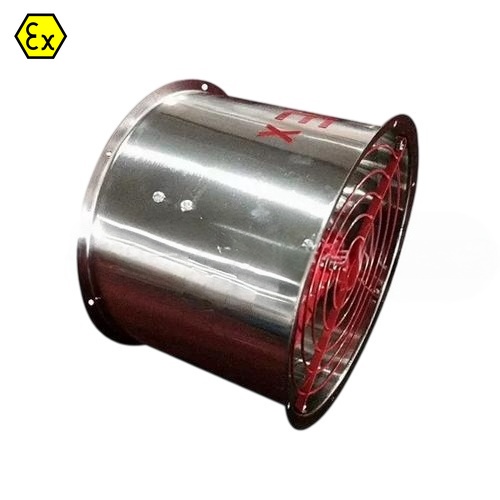
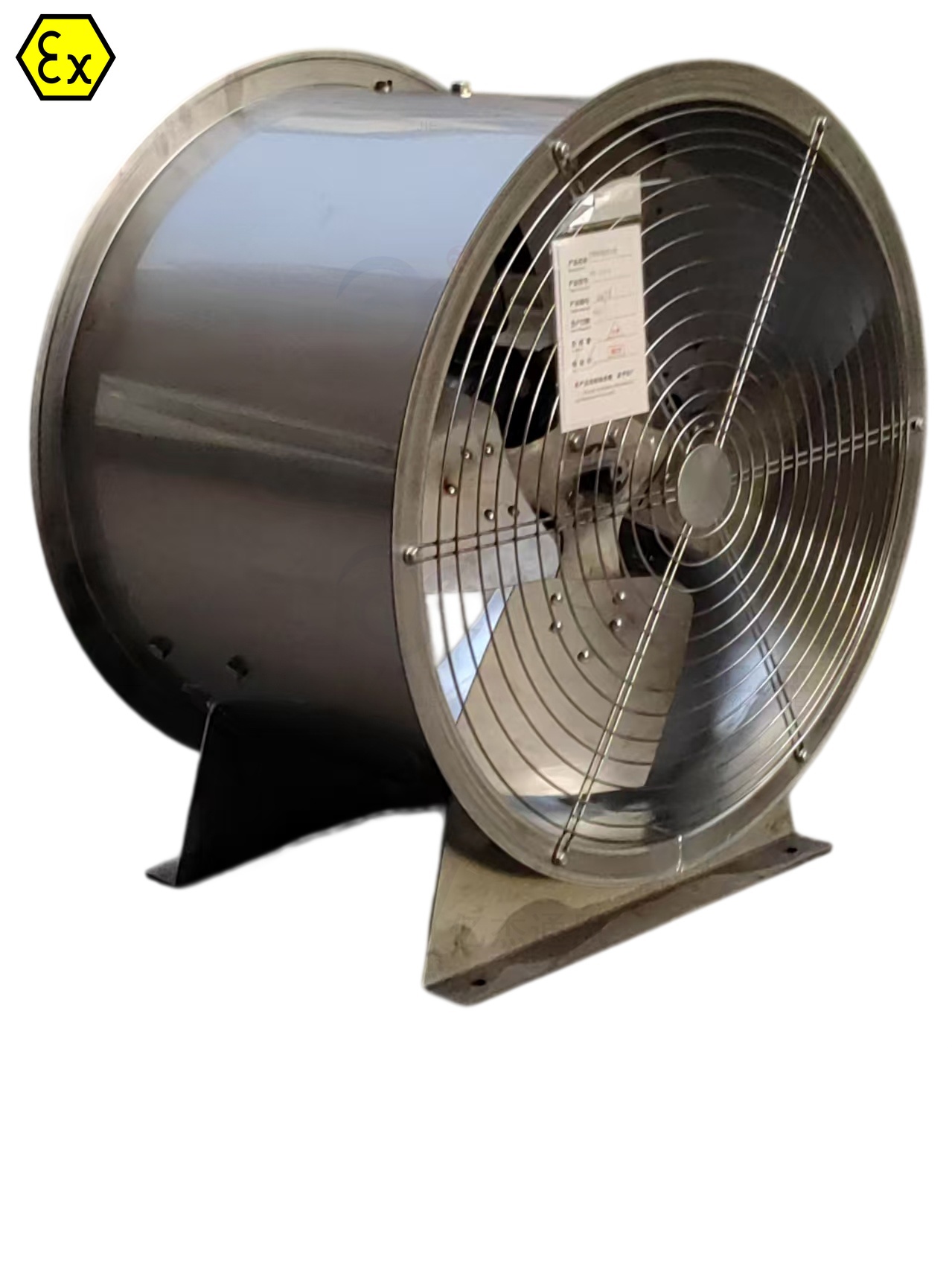

CNWINNEX BT35-11-6.3 Explosion-Proof Stainless Steel Axial Fan: 18,250 m³/h Medium-High Airflow for Reliable Ventilation Boundaries in Corrosive Hazardous Workshops
In the routine ventilation design of chemical workshops, hazardous-material warehouses, and oil and gas stations, equipment selection often faces an implicit contradiction: explosion-proof compliance answers whether a fan can be used at all, but the corrosion degradation of impellers and casings in carbon steel or aluminum alloy units under humid, mildly corrosive, or sulfur-bearing atmospheres steadily erodes the boundary of how long it remains usable. A fan that runs safely in a Zone 1 area for three years may still require premature replacement because pitting on the blades throws off dynamic balance and reduces airflow—a problem that explosion-proof certification alone does not address, but that material and process engineering must answer.
The CNWINNEX BT35-11-6.3 Explosion-Proof Stainless Steel Axial Fan is designed for precisely this contradiction: stainless steel casing and impeller confront corrosive gases and humid environments, ATEX Directive 2014/34/EU and EN 60079 series standards establish the explosion-proof baseline, and a 630mm blade diameter at 1,450 r/min delivers 18,250 m³/h airflow at 300 Pa total pressure. Marking: Ex db ib mb IIC T4 Gb, suitable for Zone 1 / Zone 2 explosive gas atmospheres.
Core Advantages
l An engineering response to corrosive conditions through stainless steel construction. Conventional explosion-proof axial fans typically use cast aluminum or carbon steel impellers. In chemical workshops, coastal plants, or hydrogen-sulfide-bearing oil and gas environments, corrosion products degrade the aerodynamic profile of the blades, reducing total pressure efficiency and amplifying vibration. The BT35-11-6.3 uses stainless steel for the casing and impeller (304 / 316L selectable per project corrosion severity), maintaining blade surface finish and dimensional stability in mildly to moderately corrosive atmospheres, and extending the airflow-degradation cycle.
l Explosion-proof depth through IIC gas group coverage.
The IIC designation in the marking Ex db ib mb IIC T4 Gb means the equipment covers not only common Group ⅡA and ⅡB gases (such as methane, propane, and ethylene) but also hydrogen and acetylene—the two media with the highest ignition risk in the gas-group classification. For chemical processes with potential hydrogen release or acetylene-handling sections, this rating provides a broader application envelope. T4 corresponds to a maximum surface temperature not exceeding 135°C, and Gb protection level qualifies the fan for Zone 1 and Zone 2.
l Airflow and noise balance at 1,450 RPM. The size 6.3 unit operates at the intermediate 1,450 r/min speed tier. Compared with solutions that rely on higher rotational speeds to achieve the same airflow demand, blade tip speed is lower, and airflow noise and mechanical vibration are correspondingly reduced. The 18,250 m³/h airflow and 300 Pa total pressure, paired with a 2.2kW power configuration, suit general ventilation of 200–500 m² chemical workshops, hazardous-material warehouses, or pump rooms, and maintain the necessary static pressure in medium-length duct systems.
l Wide voltage and installation adaptability. Standard 380V three-phase power supply, compatible with 50Hz/60Hz. The fan has an outer diameter of 720mm and an installation interface of 460mm, supporting wall-mounted, duct-mounted, and position-mounted configurations, with installation orientation adjustable to on-site duct routing.
Technical Specifications
Typical Applications
l Chemical workshops and hazardous-material warehouses. In fine chemical, coatings, and solvent storage workshops and warehouses with flammable gas release risks, the stainless steel construction withstands long-term attack from acidic gases and humid air, and the IIC rating covers potential hydrogen or acetylene conditions.
l Oil and gas stations and pump rooms. Daily air exchange and emergency exhaust in onshore oil and gas stations, metering rooms, and pump rooms. The 300 Pa total pressure overcomes resistance losses in medium-length ducts.
l Coastal and high-humidity industrial environments. The stainless steel casing slows corrosion under salt spray and high humidity, suitable for explosion-proof ventilation in coastal chemical plants or shipyard onshore workshops.
l Lithium battery and new energy workshops. Ventilation for battery production and storage areas. The IIC T4 rating provides explosion-proof protection for potential electrolyte vapor or trace hydrogen release.
Request BT35-11-6.3 Selection Support
Please provide hazardous area classification, gas group, required airflow and total pressure, installation interface dimensions, and environmental corrosion conditions. The CNWINNEX engineering team will return an ATEX-compliant configuration.
Contact Us
Web: www.cnwinnex.com Email: info@cnwinnex.com WhatsApp: +86 193 5436 4613
Leave A Reply
Please give us a message