

Categories List
Recent Posts
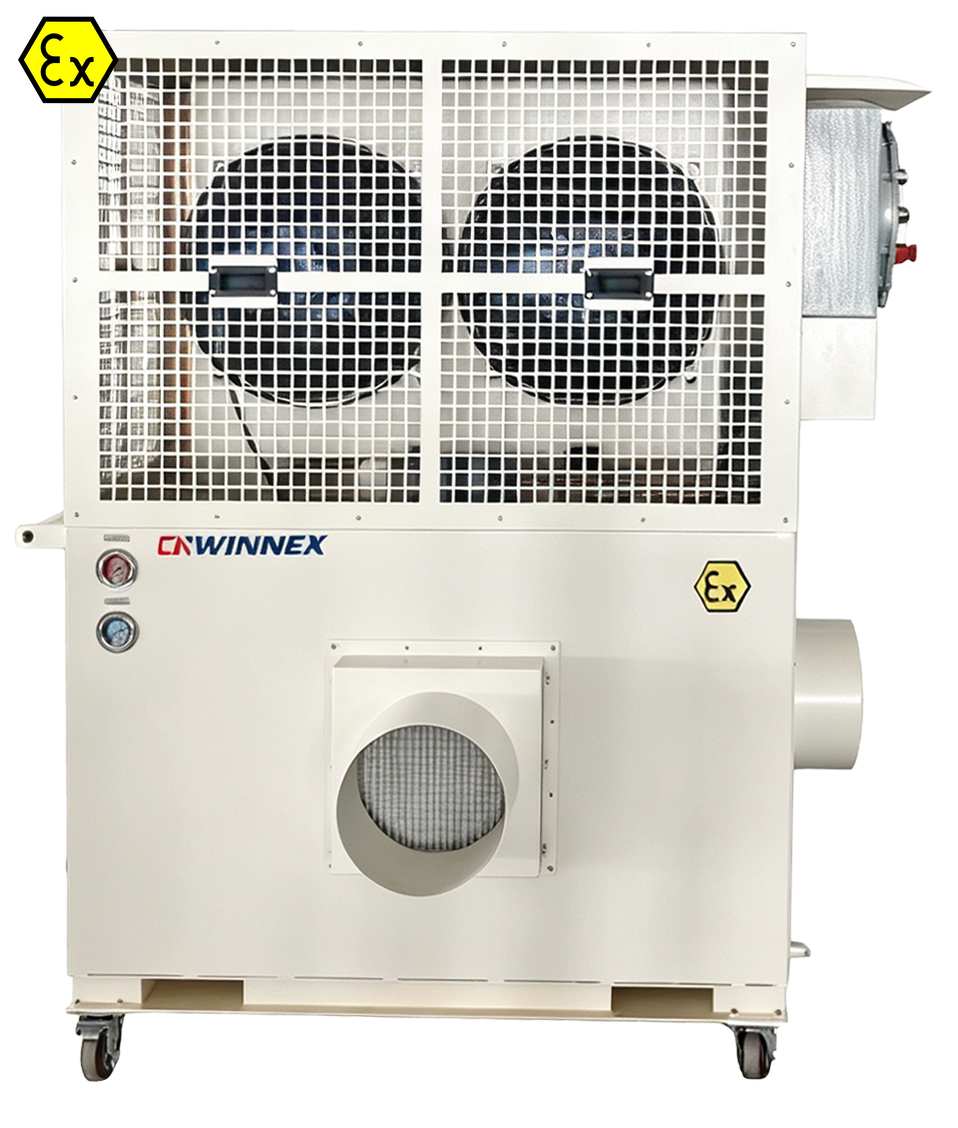
 CNWINNEX BKT-26 Mobile Packaged Explosion-Proof Air Conditioner: 25kW Plug-and-Play Cooling for Temporary and Mobile Hazardous Work ZonesThermal control requirements in hazardous areas are not always fixed. Plant turnarounds, emergency repairs, confined-space operations, temporary hazardous-material storage, and temporary explosion-proof electrical rooms share a common profile: the work location moves, the deployment window is short, and explosion-proof compliance does not relax because the job is "temporary." Conventional fixed explosion-proof air conditioners struggle in these scenarios—long installation cycles, complex piping modifications, and equipment that cannot follow the work face. The CNWINNEX BKT-26 Mobile Packaged Explosion-Proof Air Conditioner is engineered to fill this gap: 25kW cooling capacity in a fully integrated monoblock, heavy-duty swivel casters with brakes, and dual lifting provisions (top lifting eyes and bottom forklift pockets) that let an Ex db ib mb IIC T4 Gb certified unit be moved, positioned, and commissioned as work demands shift.
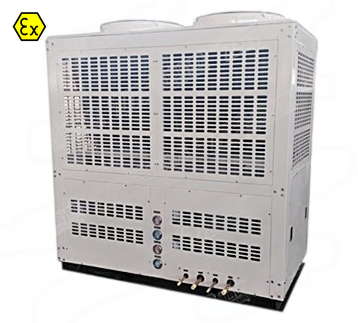
 CNWINNEX Rooftop Packaged Explosion-Proof Air Conditioner: 200kW All-in-One Thermal Control That Rethinks Installation for Marine & Offshore Hazardous AreasLarge-capacity climate control in hazardous areas has long carried a structural contradiction. Split explosion-proof systems distribute the compliance burden across indoor units, outdoor units, refrigerant piping, and on-site coordination—each interface a potential gap in the certification chain and a drag on project schedules. Conventional floor-standing or cabinet units, meanwhile, consume premium work area in spaces where every square meter already carries operational and safety value. The CNWINNEX Rooftop Packaged Explosion-Proof Air Conditioner resolves this by moving integration upstream: cooling, heating, humidification, steam heating, and the complete explosion-proof electrical control system are assembled and factory-tested in a single rooftop monoblock. On site, only power, water, and duct connections remain. With 200kW rated cooling and heating capacity and 36,000 m³/h airflow, it delivers centralized, uniform thermal control within an ATEX Zone 1/2 compliance envelope.
 CNWINNEX Explosion-Proof Split Wall-Mounted Air Conditioner: Wide-Temperature Cooling from -7℃ to 55℃ for ATEX Zone 1 & 2 Hazardous SitesIn oil and gas stations, chemical plants, and high-temperature work zones on offshore platforms, the question is not whether an air conditioner can cool—it is whether it can keep cooling when the ambient temperature pushes past 55℃, while simultaneously meeting the non-negotiable compliance requirements of Zone 1 and Zone 2 hazardous areas. Safety and performance are not a trade-off. They are the baseline.
The CNWINNEX split wall-mounted high-temperature explosion-proof air conditioner is engineered for exactly this intersection. It delivers stable cooling across a -7℃ to 55℃ ambient range, operating reliably through both extreme heat and sub-zero cold. With explosion protection marking Ex db mb IIC T4 Gb, it is suitable for Zone 1 and Zone 2 explosive gas atmospheres and designed in strict compliance with ATEX Directive 2014/34/EU. CNWINNEX Engineering Explosion-Proof AC Systems for 50°C OperationDesigning cooling equipment for 50°C ambient conditions compounds the challenges of explosion protection. Heat rejection becomes progressively more difficult as the temperature differential between the condenser and surrounding air shrinks. A unit rated for 35°C ambient may lose 30% or more of its cooling capacity at 50°C—assuming it continues operating at all. Material selection determines whether components survive sustained thermal stress: seals that remain flexible at moderate temperatures can harden and crack at 50°C, compromising both explosion protection and refrigerant containment; lubricants thin under heat, accelerating bearing wear; electronic control boards experience accelerated aging when junction temperatures climb.
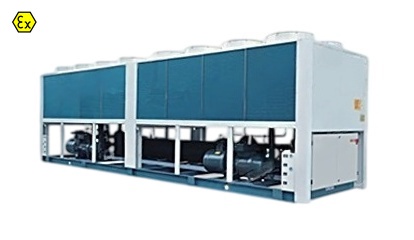
 CNWINNEX Explosion-Proof Screw Air-Cooled Chiller (Heat Pump) | Explosion-Proof Chiller for Petrochemical & Chemical IndustriesThe CNWINNEX explosion-proof screw air-cooled chiller (heat pump) is designed and manufactured in strict compliance with the EN 60079 series explosion protection standards and conforms to ATEX Directive 2014/34/EU, featuring reliable quality and superior explosion-proof performance. The unit is mainly suitable for the petroleum, chemical, electric power, military and pharmaceutical industries, and is applied in hazardous areas of Zone 1 and Zone 2 where explosive atmospheres formed by flammable gases or vapours of Group ⅡA, ⅡB, ⅡC and temperature classes T1~T4 mixed with air may exist. Explosion-proof marking: Ex db mb IIC T4 Gb, suitable for Zone 1 and Zone 2 explosive hazardous areas. With advanced twin screw compression technology, intelligent control system and reliable explosion-proof design, the unit provides efficient, stable and energy-saving chilled (or hot) water supply for high-hazard industrial sites.
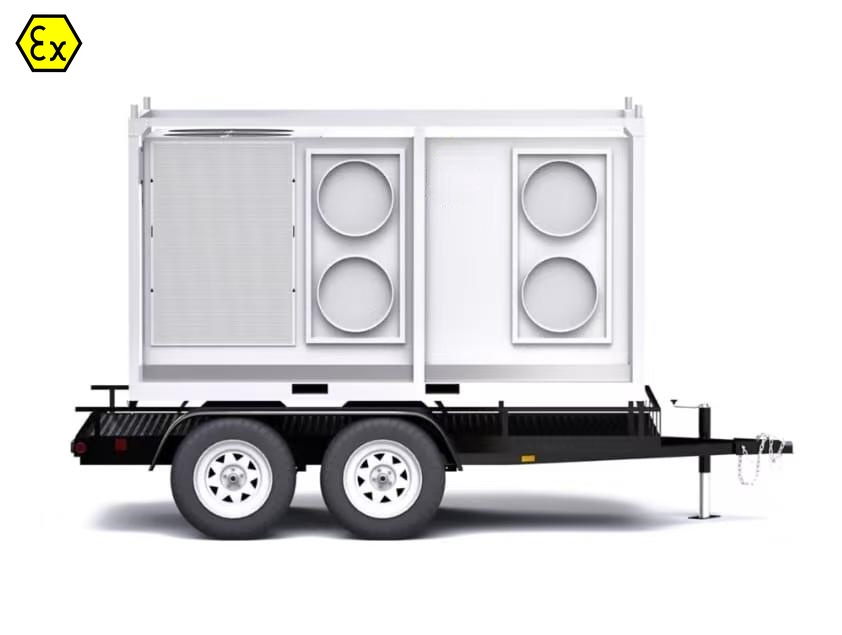
 CNWINNEX Trailer Type Packaged Explosion-Proof Air Conditioner BKT-65 | 68kW Mobile Industrial Explosion-Proof ACThe CNWINNEX trailer type packaged explosion-proof air conditioner (BKT-65) is a mobile integrated air conditioning unit specially developed for explosive hazardous areas in the petroleum, chemical, electric power, military and pharmaceutical industries. It is suitable for sites where explosive atmospheres formed by flammable gases or vapours of Group ⅡA, ⅡB, ⅡC and temperature classes T1~T4 mixed with air may exist. The unit is designed and manufactured in strict compliance with ATEX Directive 2014/34/EU and the EN 60079 series explosion protection standards. Explosion-proof marking: Ex db ib mb IIC T4 Gb, suitable for Zone 1 and Zone 2 explosive hazardous areas. Complete explosion-proof technical documentation is supplied to support HSE review and site acceptance for projects worldwide. The trailer-mounted packaged design enables rapid relocation and plug-and-play operation, delivering stable and reliable cooling for high-temperature and high-hazard work sites.
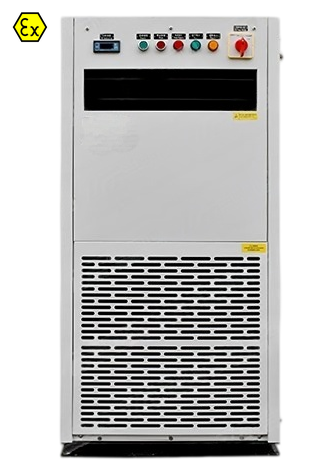
 CNWINNEX High-Temperature Cabinet Air Conditioner | 53℃~85℃ Desert High-Temp Industrial Explosion-Proof ACThe CNWINNEX high-temperature cabinet explosion-proof air conditioner is specially developed for hazardous sites with high ambient temperature (53℃~85℃) where flammable and explosive gases or dust exist, suitable for explosive gas atmospheres of Group ⅡA, ⅡB, ⅡC and temperature classes T1~T4 in Zone 1 and Zone 2 hazardous areas. The unit is designed and manufactured in strict compliance with ATEX Directive 2014/34/EU and the EN 60079 series explosion protection standards. Explosion-proof marking: Ex db mb IIC T4 Gb, suitable for Zone 1 and Zone 2 explosive hazardous areas. Operating stably in high-temperature harsh environments, the unit effectively lowers local ambient temperature and provides a comfortable and safe working and living environment for personnel. It is widely applied in high-temperature or desert regions such as the Middle East, Africa, South America and Xinjiang in China, as well as in the petroleum, chemical, metallurgical, electric power and pharmaceutical industries
 CNWINNEX Explosion-Proof Air-Cooled Chiller | ATEX Certified Industrial Explosion-Proof ChillerThe CNWINNEX explosion-proof air-cooled chiller is designed and manufactured in strict compliance with ATEX Directive 2014/34/EU and the EN 60079 series explosion protection standards, ensuring reliable quality and superior explosion protection performance. It is suitable for hazardous areas where explosive atmospheres formed by flammable gases or vapours of Group ⅡA, ⅡB, ⅡC and temperature classes T1~T4 mixed with air may exist. Explosion-proof marking: Ex db mb IIC T4 Gb, suitable for Zone 1 and Zone 2 explosive hazardous areas. Complete explosion-proof technical documentation is supplied to support HSE review and site acceptance for petroleum, chemical, electric power, military and pharmaceutical projects worldwide.

CNWINNEX BKT-26 Mobile Packaged Explosion-Proof Air Conditioner: 25kW Plug-and-Play Cooling for Temporary and Mobile Hazardous Work Zones
CNWINNEX BKT-26 Mobile Packaged Explosion-Proof Air Conditioner: 25kW Plug-and-Play Cooling for Temporary and Mobile Hazardous Work Zones
Thermal control requirements in hazardous areas are not always fixed. Plant turnarounds, emergency repairs, confined-space operations, temporary hazardous-material storage, and temporary explosion-proof electrical rooms share a common profile: the work location moves, the deployment window is short, and explosion-proof compliance does not relax because the job is "temporary." Conventional fixed explosion-proof air conditioners struggle in these scenarios—long installation cycles, complex piping modifications, and equipment that cannot follow the work face. The CNWINNEX BKT-26 Mobile Packaged Explosion-Proof Air Conditioner is engineered to fill this gap: 25kW cooling capacity in a fully integrated monoblock, heavy-duty swivel casters with brakes, and dual lifting provisions (top lifting eyes and bottom forklift pockets) that let an Ex db ib mb IIC T4 Gb certified unit be moved, positioned, and commissioned as work demands shift.
Mobility Without Compromise: Explosion-Proof Integrity in a Packaged Architecture
The BKT-26 uses a packaged configuration that integrates the refrigeration system, explosion-proof electrical controls, air supply, and condensing system into a single unit, factory-tested and explosion-proof verified before delivery. No refrigerant piping connections or secondary Ex system coordination are required on site—connect power and the unit runs. For temporary hazardous work zones, the significance is that explosion-proof compliance is guaranteed at the factory, independent of multi-trade field installation quality, and equipment relocation does not reintroduce certification risk. At 1,549×900×1,996mm and 640kg, the unit rolls into position on braked heavy-duty casters; top lifting eyes and bottom forklift pockets cover both crane lifts and ground-level forklift transfer, accommodating the varied handling conditions of process units, warehouse spaces, and shipyard quayside work areas.
Wide Temperature Range and High Ingress Protection: Margin for Harsh Conditions
Operating temperature range of -20℃ to +55℃ covers conditions from cold regions to high-temperature process areas. The 43℃ cooling design condition preserves cooling capacity margin in most high-temperature hazardous work environments. IP66 electrical protection, combined with copper-tube/aluminum-fin heat exchangers with anti-corrosion coating and dual-stage washable/removable intake filters, maintains heat-exchange efficiency and electrical safety under dust, moisture, and washdown exposure. A hermetic scroll compressor, low-noise centrifugal supply fan, and low-noise axial condensing fan keep sound pressure at 77dB(A) at one meter—balancing cooling performance with acoustic conditions in confined spaces and occupied work areas. The adjustable temperature range of +20℃ to +26℃ serves both personnel comfort and equipment operating requirements.
Explosion Protection and Operational Continuity
The unit carries explosion-proof marking Ex db ib mb ⅡC T4 Gb, combining flameproof, intrinsically safe, and encapsulated protection for Zone 1 and Zone 2 explosive gas atmospheres, covering Group ⅡC gases and temperature class T4. Protection functions include compressor and fan overload protection, phase-sequence protection, compressor high/low pressure protection, and flow switch (air pressure alarm)—reducing downtime risk from power anomalies, blocked airflow, or refrigeration faults in unattended or temporarily deployed settings. Thermal expansion valve metering and R134a refrigerant combine system stability with maintenance convenience. Dual power supply options—380–415V/3Ph/50Hz and 440–460V/3Ph/60Hz—adapt to different regional industrial grid conditions.
Typical Applications (Onshore Hazardous Areas and Shipyard Quayside)
Plant turnarounds and maintenance shutdowns — Explosion-proof heating and cooling for temporary work points, analyzer shelters, and confined spaces during refinery and chemical plant maintenance, relocating with the work face as the turnaround progresses.
Temporary hazardous-material storage and emergency response — Personnel protection and equipment cooling at temporary hazardous-material staging areas, emergency repair sites, and leak-response work zones.
Confined spaces and temporary electrical rooms — Tank, underground utility tunnel, and underground plant operations, plus temporary explosion-proof electrical equipment rooms.
Onshore oil & gas stations and chemical plant areas — Temporary or mobile thermal control for desert oil and gas stations, refinery process units, and fine chemical workshops at high-temperature hazardous work points.
Shipyard quayside and offshore fabrication yards (onshore) — Temporary explosion-proof thermal control during quayside commissioning, onshore module integration, and pre-run testing.
Hazardous-material warehouses and port onshore chemical zones — Temporary thermal control and emergency cooling for hazardous-material storage, chemical warehouses, and onshore port chemical areas.
Leave A Reply
Please give us a message