

Categories List
Recent Posts
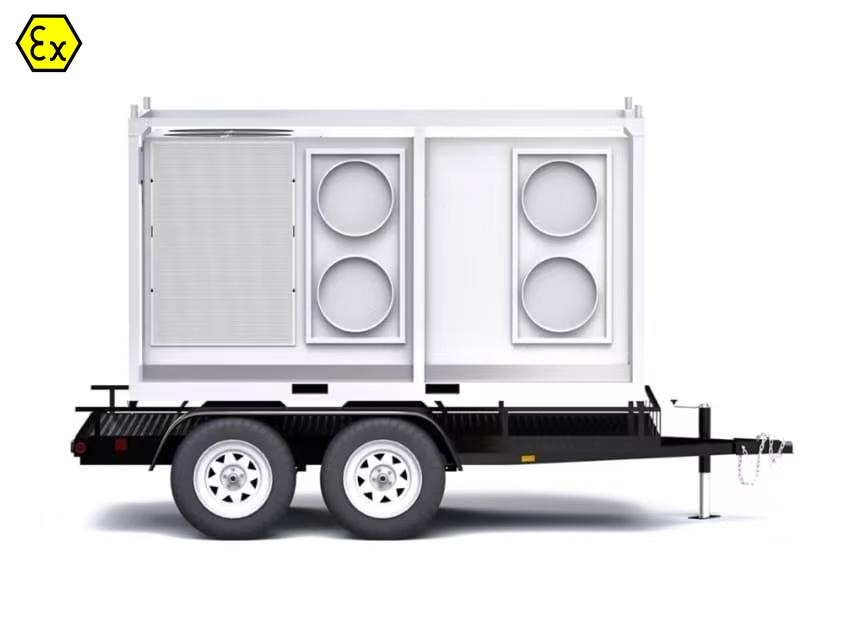
 CNWINNEX Trailer Type Packaged Explosion-Proof Air Conditioner BKT-65 | 68kW Mobile Industrial Explosion-Proof ACThe CNWINNEX trailer type packaged explosion-proof air conditioner (BKT-65) is a mobile integrated air conditioning unit specially developed for explosive hazardous areas in the petroleum, chemical, electric power, military and pharmaceutical industries. It is suitable for sites where explosive atmospheres formed by flammable gases or vapours of Group ⅡA, ⅡB, ⅡC and temperature classes T1~T4 mixed with air may exist. The unit is designed and manufactured in strict compliance with ATEX Directive 2014/34/EU and the EN 60079 series explosion protection standards. Explosion-proof marking: Ex db ib mb IIC T4 Gb, suitable for Zone 1 and Zone 2 explosive hazardous areas. Complete explosion-proof technical documentation is supplied to support HSE review and site acceptance for projects worldwide. The trailer-mounted packaged design enables rapid relocation and plug-and-play operation, delivering stable and reliable cooling for high-temperature and high-hazard work sites.
 CNWINNEX High-Temperature Cabinet Air Conditioner | 53℃~85℃ Desert High-Temp Industrial Explosion-Proof ACThe CNWINNEX high-temperature cabinet explosion-proof air conditioner is specially developed for hazardous sites with high ambient temperature (53℃~85℃) where flammable and explosive gases or dust exist, suitable for explosive gas atmospheres of Group ⅡA, ⅡB, ⅡC and temperature classes T1~T4 in Zone 1 and Zone 2 hazardous areas. The unit is designed and manufactured in strict compliance with ATEX Directive 2014/34/EU and the EN 60079 series explosion protection standards. Explosion-proof marking: Ex db mb IIC T4 Gb, suitable for Zone 1 and Zone 2 explosive hazardous areas. Operating stably in high-temperature harsh environments, the unit effectively lowers local ambient temperature and provides a comfortable and safe working and living environment for personnel. It is widely applied in high-temperature or desert regions such as the Middle East, Africa, South America and Xinjiang in China, as well as in the petroleum, chemical, metallurgical, electric power and pharmaceutical industries
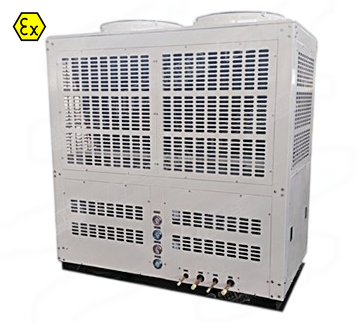
 CNWINNEX Explosion-Proof Air-Cooled Chiller | ATEX Certified Industrial Explosion-Proof ChillerThe CNWINNEX explosion-proof air-cooled chiller is designed and manufactured in strict compliance with ATEX Directive 2014/34/EU and the EN 60079 series explosion protection standards, ensuring reliable quality and superior explosion protection performance. It is suitable for hazardous areas where explosive atmospheres formed by flammable gases or vapours of Group ⅡA, ⅡB, ⅡC and temperature classes T1~T4 mixed with air may exist. Explosion-proof marking: Ex db mb IIC T4 Gb, suitable for Zone 1 and Zone 2 explosive hazardous areas. Complete explosion-proof technical documentation is supplied to support HSE review and site acceptance for petroleum, chemical, electric power, military and pharmaceutical projects worldwide.
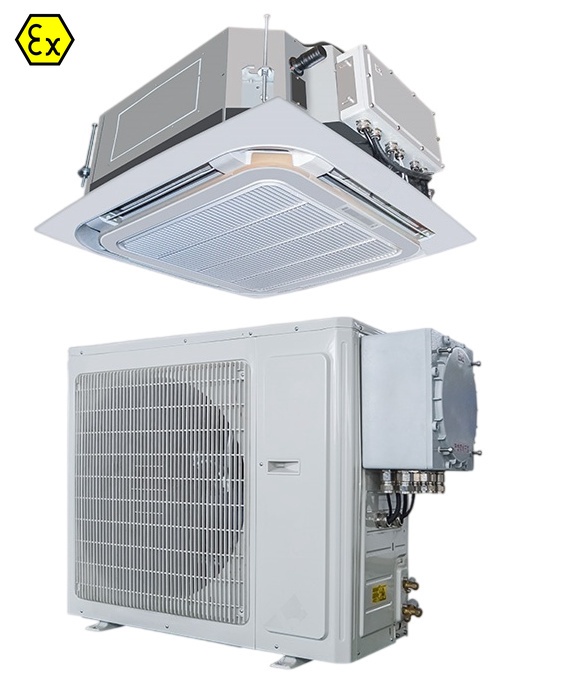
 CNWINNEX Explosion-Proof Ceiling Cassette Air Conditioner | Flush-Mounted Industrial Explosion-Proof Cassette ACThe CNWINNEX explosion-proof ceiling cassette air conditioner adopts an internationally leading ultra-low voltage technology to isolate intrinsically safe circuits. Manufactured with special processes and explosion protection treatment, it fully meets explosion protection requirements and is widely used in hazardous areas where explosive atmospheres formed by flammable gases or vapours of Group ⅡA, ⅡB, ⅡC and temperature classes T1~T4 mixed with air may exist. The unit is designed and manufactured in strict compliance with ATEX Directive 2014/34/EU and the EN 60079 series explosion protection standards. Explosion-proof marking: Ex db mb IIC T4 Gb, suitable for Zone 1 and Zone 2 explosive hazardous areas. Complete explosion-proof technical documentation is supplied to support HSE review and site acceptance for chemical, oil & gas and pharmaceutical projects worldwide.
 CNWINNEX Power Plant Explosion-Proof Air Conditioner | Industrial Explosion-Proof AC for Hydrogen Hazardous AreasThe CNWINNEX power plant explosion-proof air conditioner is an industrial-grade unit specially developed and manufactured for flammable and explosive sites containing hydrogen, such as power plants, substations and communication facilities. It is designed for hazardous areas where explosive atmospheres formed by flammable gases or vapours of Group ⅡA, ⅡB, ⅡC and temperature classes T1~T4 mixed with air may exist. The unit is designed and manufactured in strict compliance with ATEX Directive 2014/34/EU and the EN 60079 series explosion protection standards. Explosion-proof marking: Ex db mb IIC T4 Gb, suitable for Zone 1 and Zone 2 explosive hazardous areas. Complete explosion-proof technical documentation is supplied to support HSE review and site acceptance for power plant, substation and electric power projects.
 CNWINNEX Explosion-Proof Combined Air Handling Unit | Modular Explosion-Proof AHU for Hazardous AreasThe explosion-proof combined air handling unit (AHU) is a modular air treatment equipment assembled from various air handling sections. The unit carries no cold or heat source of its own and delivers multiple functions including explosion-proof cooling, dehumidification, humidification and heating. It is mainly designed for industrial sites where explosive atmospheres formed by flammable gases or vapours of Group ⅡA, ⅡB, ⅡC and temperature classes T1~T4 mixed with air may exist. The unit is designed and manufactured in strict compliance with ATEX Directive 2014/34/EU and the EN 60079 series explosion protection standards. Explosion-proof marking: Ex db mb IIC T4 Gb, suitable for Zone 1 and Zone 2 explosive hazardous areas. All electrical components and operating circuits are fully treated for explosion protection. Complete explosion-proof technical documentation is supplied to support HSE review and site acceptance for chemical, oil & gas and pharmaceutical projects worldwide.
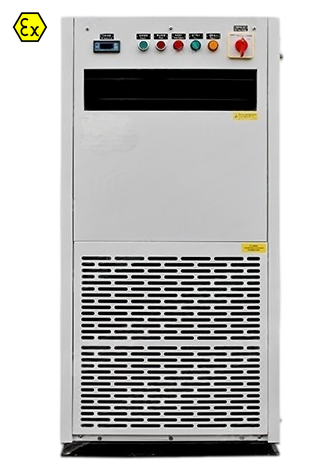
 CNWINNEX Atex Certified Explosion-Proof Floor Standing Cabinet Air Conditioner | Split Type Explosion Proof AC for Hazardous AreasCNWINNEX explosion-proof floor standing cabinet air conditioner is mainly designed for industrial sites where explosive atmospheres formed by flammable gases or vapours of Group ⅡA, ⅡB, ⅡC and temperature classes T1~T4 mixed with air may exist. The unit is designed and manufactured in strict compliance with ATEX Directive 2014/34/EU and the EN 60079 series explosion protection standards. Explosion-proof marking: Ex db mb IIC T4 Gb, suitable for Zone 1 and Zone 2 explosive hazardous areas. All electrical systems and operating circuits are fully treated for explosion protection, ensuring safe and reliable operation with guaranteed quality.
 CNWINNEX Explosion-Proof Combined Air Handling Unit | Modular Explosion-Proof AHU for Hazardous AreasThe explosion-proof combined air handling unit is the key air treatment equipment in HVAC systems. It is mainly designed for industrial sites where explosive atmospheres formed by flammable gases or vapours of Group ⅡA, ⅡB, ⅡC and temperature classes T1~T4 mixed with air may exist. The unit is designed and manufactured in strict compliance with ATEX Directive 2014/34/EU and the EN 60079 series explosion protection standards. Explosion-proof marking: Ex db mb IIC T4 Gb, suitable for Zone 1 and Zone 2 explosive hazardous areas. All electrical components and operating circuits are fully treated for explosion protection. Complete explosion-proof technical documentation is supplied to support HSE review and site acceptance for chemical, oil & gas and pharmaceutical projects worldwide.
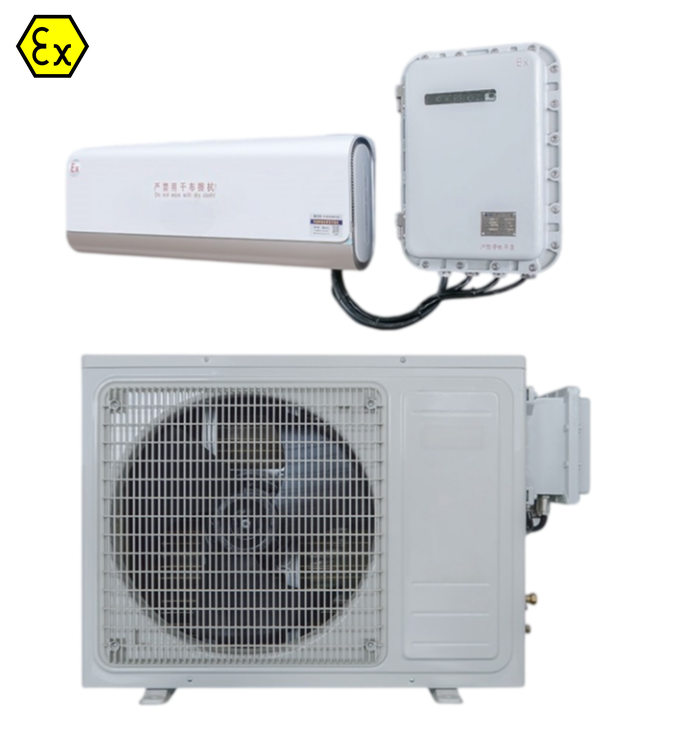
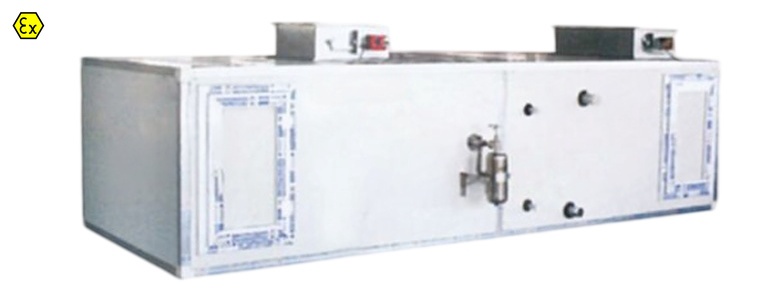
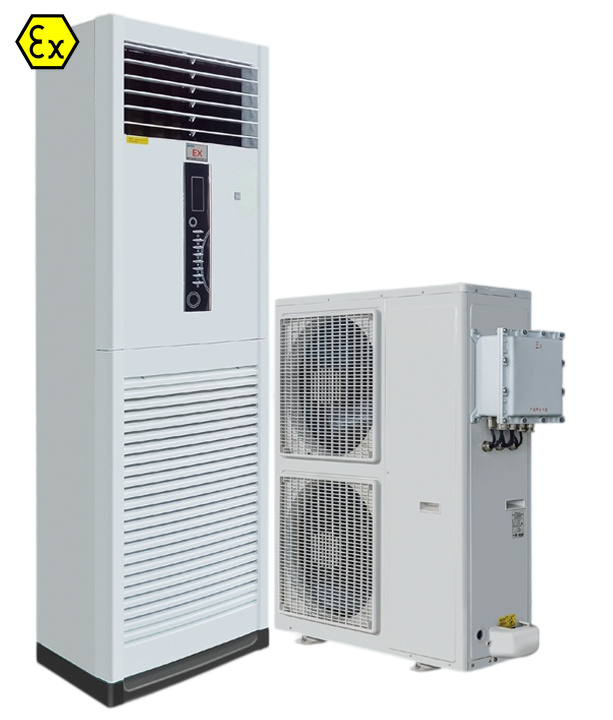
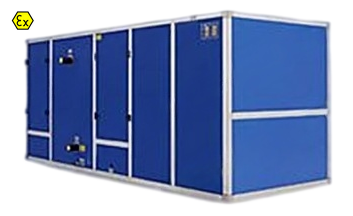

What Is ATEX-Certified Explosion-Proof Air Conditioning? Zone Classification & Industrial Compliance Guide
What Is ATEX-Certified Explosion-Proof Air Conditioning? Zone Classification & Industrial Compliance Guide
For oil & gas refineries, fine chemical workshops, grain powder processing plants, lithium battery warehouses and offshore marine facilities, ambient temperature control is not only a comfort requirement, but a core safety compliance obligation. Conventional commercial air conditioners are banned in classified explosive atmospheres across the EU and global regulated industrial sites. This article breaks down the definition, hazard mechanisms, zone matching standards and core advantages of CNWINNEX ATEX-certified explosion-proof air conditioners, helping EPC contractors and plant operators avoid regulatory penalties and onsite explosion risks.
1. Definition of ATEX Explosion-Proof Air Conditioning
ATEX explosion-proof air conditioning is a customized industrial HVAC system fully compliant with EU 2014/34/EU ATEX equipment directive, structurally reconstructed to eliminate all potential ignition sources inside cooling units. Unlike modified ordinary air conditioners, CNWINNEX explosion-proof AC undergoes third-party notified body full-type testing, with official ATEX marking for dual gas and dust hazardous atmospheres.
It is exclusively verified for four mainstream hazardous zone classifications recognized by ATEX and IEC standards:
Gas Zone 1: Explosive gas-air mixture exists continuously or frequently under normal operating conditions (e.g. closed chemical reaction kettles, indoor gas metering rooms)
Gas Zone 2: Explosive gas mixture only occurs occasionally and for short durations under normal operation (e.g. outdoor pipeline valve areas)
Dust Zone 21: Combustible dust clouds form periodically during regular production cycles (e.g. flour milling, pharmaceutical powder blending workshops)
Dust Zone 22: Dust clouds only leak accidentally due to equipment failure (e.g. finished powder packaging warehouses)
Most peer explosion-proof AC only support Zone 2 and Zone 22, while all CNWINNEX models cover the full four zones, eliminating the need for separate gas and dust cooling equipment for mixed hazardous workshops.
2. Why Conventional Air Conditioners Cause Explosion Hazards in Hazardous Zones
Standard HVAC systems are designed for non-hazardous ambient environments such as office buildings and general factories. Every internal electrical and mechanical component can become an ignition trigger in flammable gas/dust atmospheres. We summarize four overlooked onsite risks that lead to industrial safety accidents:
2.1 Accidental electrical spark discharge
Built-in contactors, fan motors, temperature control circuit boards and power switching relays inside ordinary AC will generate tiny arc sparks during startup, shutdown and load fluctuation. In gas concentrations reaching lower explosive limit (LEL), sparks with energy above 0.28mJ can directly trigger deflagration. In Zone 1 sites where gas accumulates for long periods, this risk reaches fatal levels.
2.2 Overlimit surface hot temperature
Long-running compressors, condenser metal shells and power junction boxes will accumulate heat. Conventional AC surface temperature can exceed 90℃ in high ambient temperature. For hydrocarbon vapors and aluminum powder dust with low ignition temperature, high-temperature metal surfaces can cause spontaneous combustion without electric sparks. CNWINNEX strictly controls maximum surface temperature at T4 class (<135℃) covering all mainstream low-flash hazardous materials.
2.3 Unsealed internal component structure
Standard air conditioner internal circuits are fully exposed. Floating combustible dust will penetrate into the electrical cabin, adhere to circuit boards and cause short circuits after moisture absorption. This is the primary cause of dust explosion failures in Zone 21 grain processing factories.
2.4 Lack of corrosion and marine anti-leakage design
Offshore platforms and coastal chemical plants contain salt fog and corrosive chemical vapors. Corroded wiring terminals will induce creepage and spontaneous ignition, a common hidden danger ignored by generic explosion-proof cooling equipment.
3. Core Certified Safety Features of CNWINNEX Explosion-Proof AC
Based on onsite pain points across global hazardous projects, CNWINNEX optimizes ATEX compliant structures beyond basic industry standards, with verifiable third-party test records:
Dual II 2G / II 2D ATEX Certification: Full compliance for Zone1/2 gas and Zone21/22 dust locations, valid for EU market free circulation, accepted by all mainstream EPC contractors including Bechtel and TechnipFMC
Integrated flameproof and increased safety structure: All electrical cabins adopt cast aluminum flameproof enclosures that can withstand internal explosion pressure without shell rupture and spark overflow. All wiring ports use certified explosion-proof cable glands to block gas and dust penetration
Marine-grade corrosion resistance: External shell sprayed with epoxy anti-corrosion coating, adapted to high-salt, high-humidity offshore and coastal chemical working conditions, 8-year service life under harsh environments
24/7 uninterrupted industrial operation: Wide voltage adaptation (180V-415V) to solve voltage fluctuation problems in remote oilfield sites; intelligent overheating and short-circuit dual protection without manual shutdown
Low emission air circulation system: Positive pressure air isolation design to avoid cross-circulation of hazardous gas between indoor and outdoor units
4. Typical Applicable Industrial Scenarios
CNWINNEX ATEX explosion-proof air conditioners serve full-cycle hazardous area cooling demands, covering mixed gas-dust composite sites:
Oil & gas upstream: Offshore drilling platforms, onshore gas gathering stations, crude oil storage tank auxiliary control rooms
Fine chemical industry: VOC coating workshops, solvent recovery workshops, pesticide synthesis production lines
Powder manufacturing: Lithium battery cathode powder workshops, starch and grain processing production lines, carbon powder packaging warehouses
Special hazardous storage: Class 3 flammable liquid warehouses, chemical waste temporary storage rooms
5. Why ATEX Certification Is Non-Negotiable for Global Projects
Many project operators confuse CE general certification with ATEX explosion-proof certification. General CE only meets ordinary product safety standards and cannot be used for explosive atmospheres. ATEX is a mandatory legal requirement for equipment deployed in EU classified hazardous zones. Uncertified cooling equipment will lead to three major consequences: forced site shutdown, project delivery delay, and third-party liability compensation after safety accidents.
Besides conventional air conditioners, supporting peripheral equipment such as site ventilation fans and power distribution cabinets also require matching ATEX zone-level certification. CNWINNEX provides one-stop ATEX HVAC matching consultation for integrated hazardous area engineering projects.
Frequently Asked Questions (FAQ)
Q1: Can one CNWINNEX unit cover both gas and dust hazardous zones?
A1: Yes. Our flagship dual-certified models carry both II 2G and II 2D ATEX marks, supporting mixed Zone 2 + Zone 22 composite workshops without purchasing two separate devices, cutting procurement and maintenance costs by 30%.
Q2: What is the difference between IECEx and ATEX certification?
A2: ATEX is mandatory for EU domestic sites; IECEx is international mutual recognition certification for Middle East, Southeast Asia and African oilfield projects. CNWINNEX supports dual ATEX and IECEx certification for global cross-border project delivery.
Q3: Is routine maintenance required for explosion-proof air conditioners?
A3: Unlike ordinary AC, explosion-proof models require annual explosion-proof tightness inspection of enclosure joints and cable glands. We provide global remote after-sales guidance and overseas local partner onsite inspection services.
Q4: Can Zone 2 equipment be used in Zone 1 sites?
A4: No. Zone 1 requires higher-level ignition resistance. Only CNWINNEX full-range enhanced models are qualified for direct deployment in Zone 1 and Zone 21 continuous hazardous atmospheres.
Conclusion
Hazardous area temperature control is no longer a simple cooling demand, but a core compliance and safety risk control link. Conventional air conditioners and single-type Zone 2-only explosion-proof equipment cannot cope with complex mixed gas and dust working conditions. As a professional ATEX-certified industrial HVAC brand, CNWINNEX provides full-series Zone 1/2/21/22 compliant explosion-proof air conditioners, covering indoor wall-mounted, ducted, floor-standing and offshore customized models. All products pass notified body third-party testing with complete traceable certification documents.
Leave A Reply
Please give us a message