

Categories List
Recent Posts
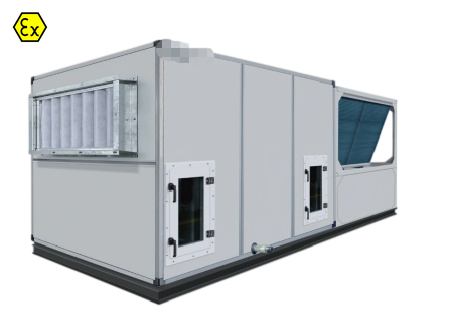
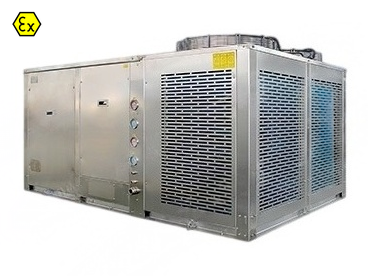
 CNWINNEX BKT-260 Explosion-Proof Packaged Rooftop Unit, ATEX Certified Integrated RTU, Cooling Capacity 205kWCNWINNEX BKT-260 explosion-proof packaged rooftop unit is a fixed-speed integrated rooftop explosion-proof air conditioner. Designed and manufactured in accordance with ATEX Directive 2014/34/EU and EN60079 series explosion protection standards, explosion-proof marking: Ex db ib mb IIC T4 Gb, suitable for T1 temperature group explosive atmospheres. The all-in-one packaged design enables direct outdoor rooftop installation without dedicated machine room. Developed for Zone 1 and Zone 2 hazardous locations in petroleum, chemical, pharmaceutical, energy storage and other industries, it delivers integrated cooling and heating for air conditioning control.
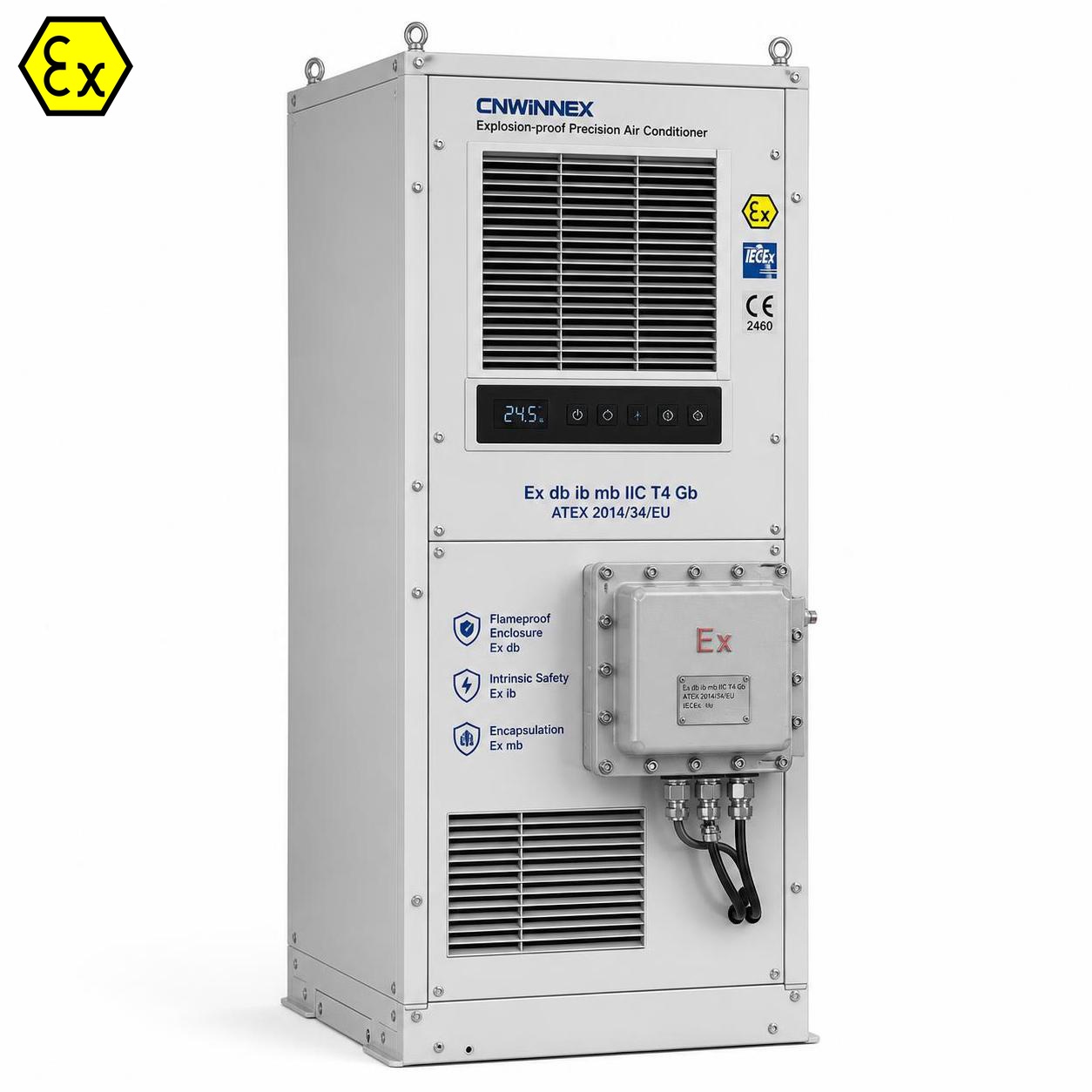
 CNWINNEX ATEX‑Certified Explosion‑Proof Rooftop Packaged Air Conditioning Unit, Outdoor‑Mount RTU for Zone1 / Zone2 Hazardous LocationsCNWINNEX explosion‑proof rooftop air‑conditioning unit is designed and manufactured in strict compliance with ATEX Directive 2014/34/EU and EN 60079 series explosion‑protection standards. It holds official explosion‑proof certificate issued by authorized explosion‑proof electrical product quality supervision & inspection institute. Explosion‑proof marking: Ex db ib mb IIC T4 Gb. The unit delivers high safety, reliable quality and superior explosion‑proof performance.
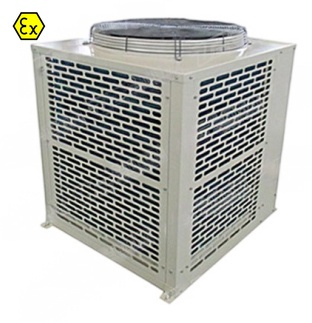
It is widely applied in petroleum, chemical, power, military and pharmaceutical industries for Zone 1 and Zone 2 hazardous locations, where flammable gas‑vapor‑air mixtures of ⅡA, ⅡB, ⅡC classes and T1~T4 temperature groups may occur. CNWINNEX Unitary Explosion-Proof Air Conditioning Unit | ATEX Certified Energy-Saving Explosion-Proof HVAC for Industrial Hazardous AreasCNWINNEX unitary explosion-proof air conditioning unit is a professional explosion-proof HVAC equipment independently developed by CNWINNEX with cutting-edge HVAC technology and years of in-depth research on high-risk industrial scenarios. Adhering to the design philosophy of safety, energy saving, environmental protection and health, the unit features reasonable overall structure, compact size, light weight, low noise, stable operation and high energy efficiency. It is a mainstream high-demand explosion-proof temperature control device and maintains high Google search popularity in the global industrial explosion-proof HVAC field.
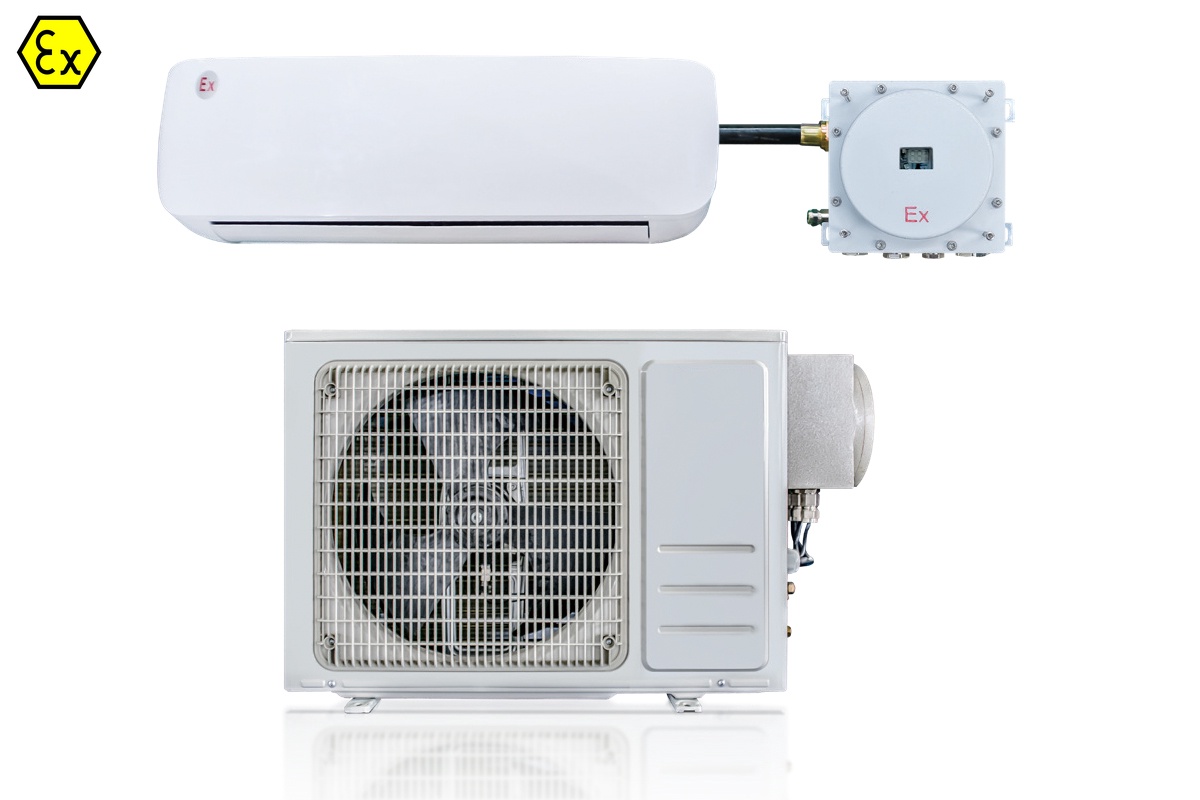
 CNWINNEX BKT-5.0(F) Explosion-Proof Split Wall Mounted Air Conditioners Delivered to Indonesia ClientRecently, CNWINNEX has completed production, explosion-proof inspection, packaging and shipment. A total of 3 units of BKT-5.0 (F) explosion-proof split wall mounted air conditioners were successfully delivered to a client in Indonesia to provide safe and reliable temperature control solutions for local high-risk industrial areas.
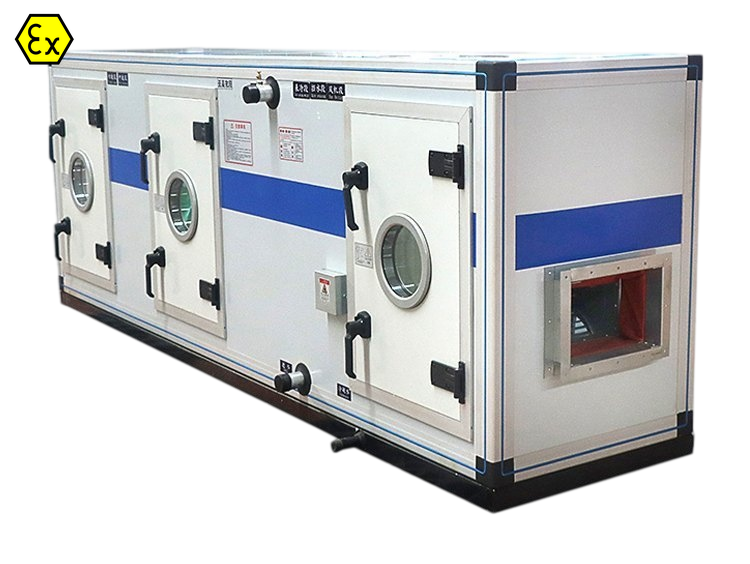
 CNWINNEX ATEX Certified Explosion Proof Combined Air Handling Unit, Modular Explosion-Proof AHU for Hazardous AreasDiscover CNWINNEX ATEX certified explosion-proof modular air handling units for Zone 1 and Zone 2 hazardous areas. Configurable AHU sections provide safe ventilation, filtration, cooling, heating and air treatment for chemical, oil and gas, pharmaceutical and energy storage facilities.
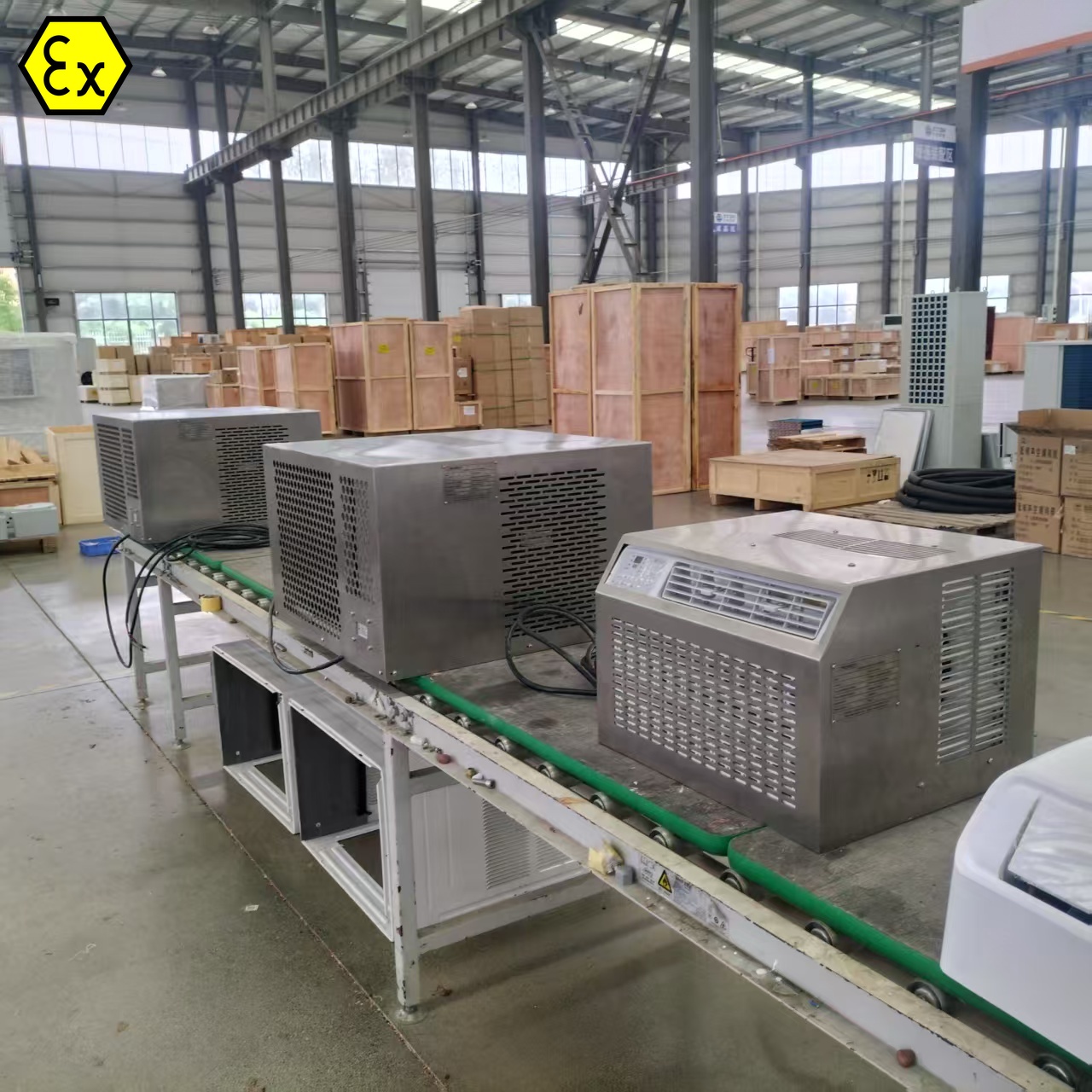
 CNWINNEX BKT Series 316L Stainless Steel Explosion-Proof Window AC Delivered to Petrobras Offshore Drilling Platform Project in BrazilRecently, a new batch of CNWINNEX explosion-proof window air conditioners has completed factory explosion-proof verification, anti-corrosion inspection and packaging, and been successfully delivered to a Brazilian client. The units will be officially applied to the hazardous area temperature control project of Petrobras offshore drilling platforms in Brazil. The shipment includes 2 units of BKT-7.5 explosion-proof window air conditioners (7.5KW cooling capacity) and 1 unit of BKT-2.6 explosion-proof window air conditioner (2.6KW cooling capacity). Built with full 316L stainless steel enclosure and customized with a 60Hz power system to meet the on-site power conditions of offshore drilling platforms, the units deliver outstanding salt spray resistance and anti-corrosion performance, serving as fully ATEX Certified professional explosion-proof HVAC solutions for offshore drilling platform working conditions.
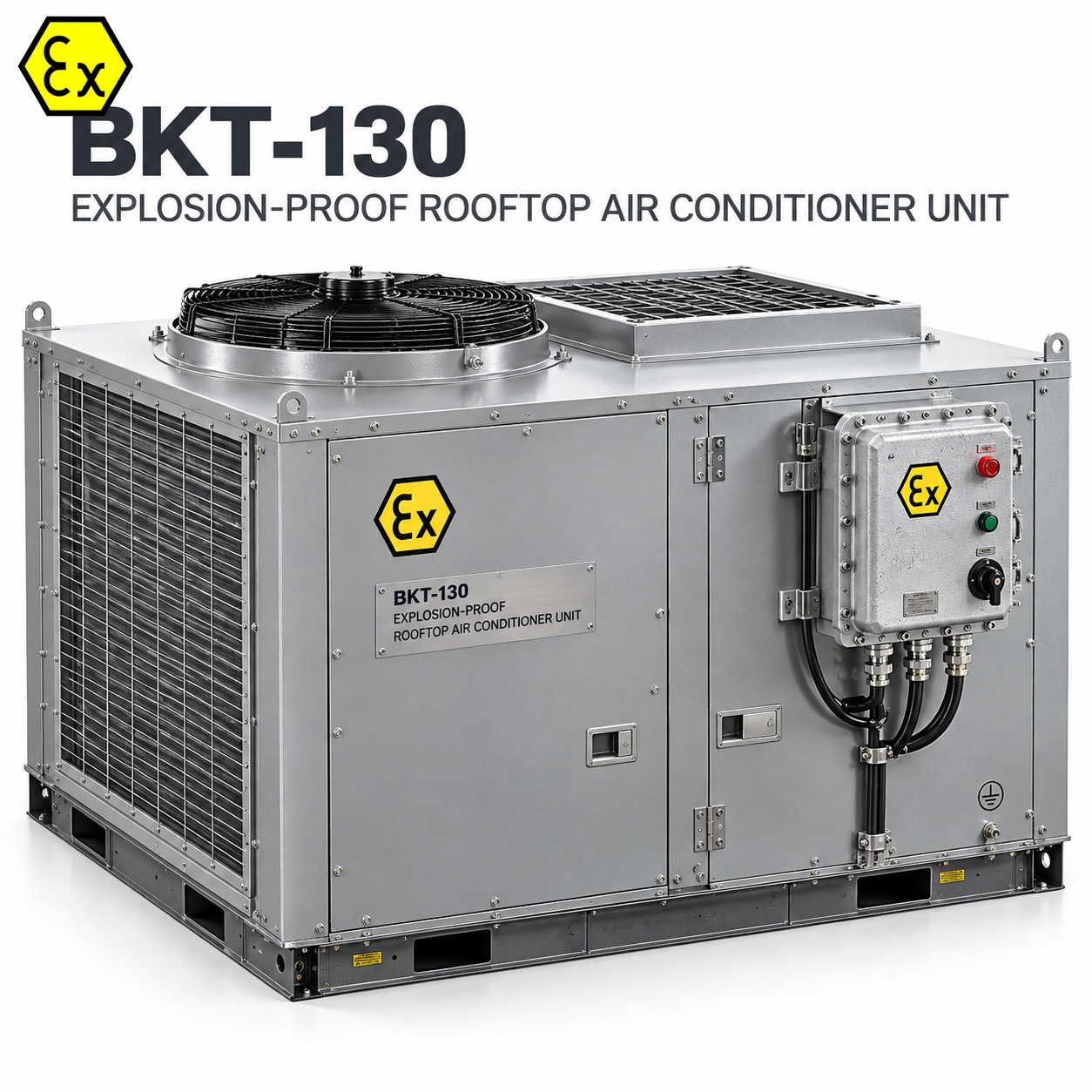
- BKT-130 Explosion Proof Rooftop Air Conditioning Unit | ATEX / CNEX Certified Packaged Rooftop HVAC for Hazardous AreasCNWINNEX BKT-130 explosion proof rooftop air conditioning unit is a fully packaged rooftop HVAC system integrating cooling, heating and 100% fresh air supply. The whole unit is fully explosion-proof engineered for industrial sites with explosive gas and dust atmospheres. For chemical, oil & gas, pharmaceutical and hazardous material projects, **explosion proof rooftop air conditioner** is a widely searched hazardous-area climate control solution. The all-in-one rooftop design minimizes on-site ductwork installation and delivers centralized fresh air and temperature control for large industrial workshops.
- Why Choose CNWINNEX Explosion Proof Air Conditioners | Full-Range Explosion-Proof HVAC for Global Hazardous Industrial ProjectsIn hazardous locations such as petrochemical plants, oil and gas facilities, pharmaceutical sites, LNG terminals and offshore platforms, conventional air conditioners carry potential ignition risks. Certified explosion-proof air conditioning is essential for protecting personnel, precision instruments and continuous production operations.
CNWINNEX has accumulated extensive experience in explosion-proof HVAC solutions. We offer a complete explosion-proof air conditioner portfolio to meet international certification requirements, site conditions and customized demands for global projects. Our products have been successfully exported to the USA, United Kingdom, Brazil, Argentina, Indonesia, Singapore, Vietnam, Thailand, Malaysia, UAE, Qatar, Uzbekistan and Australia.
Classification of Hazardous Area & Explosive Atmospheres
● Classification of Hazardous Area
1. Gas / Vapour Hazardous Areas
Zone 0:Area where explosive gas atmosphere is present continuously, for long periods or frequently
Zone 1:Area where explosive gas atmosphere is likely to occur occasionally in normal operation
Zone 2:Area where explosive gas atmosphere is not likely to occur in normal operation; if present, exists only for a short time
2. Dust Hazardous Areas
Zone 20:Area where explosive dust atmosphere is present continuously, for long periods or frequently
Zone 21:Area where explosive dust atmosphere is likely to occur occasionally in normal operation
Zone 22:Area where explosive dust atmosphere is not likely to occur in normal operation; if present, exists only for a short time
● Classification of Equipment for Explosive Atmospheres
1. Equipment Groups
Group I:Equipment for mines susceptible to firedamp
Group II:Equipment for explosive gas atmospheres other than mines
IIA:Representative gas: Propane
IIB:Representative gas: Ethylene
IIC:Representative gas: Hydrogen, Acetylene, highest risk
Group III:Equipment for explosive dust atmospheres
IIIA:Combustible flyings
IIIB:Non-conductive dust
IIIC:Conductive dust, highest risk
2. Equipment Categories
Category 1:Very high safety, for Zone 0 / 20
Category 2:High safety, for Zone 1 / 21
Category 3:Normal safety, for Zone 2 / 22
3. Equipment Protection Level (EPL)
Gas atmospheres: Ga (Zone 0), Gb (Zone 1), Gc (Zone 2)
Dust atmospheres: Da (Zone 20), Db (Zone 21), Dc (Zone 22)
4. Common Types of Protection
Flameproof enclosure: d
Increased safety: e
Intrinsic safety: i
Pressurized enclosure: p
Oil immersion: o
Sand filling: q
Leave A Reply
Please give us a message